The 4 Best Japanese Damascus Knife Sets of 2026: Laboratory Tested
Japanese culinary cutlery is revered for surgical 15-degree bevels, thin distal tapers, and ultra-hard 60+ HRC core metallurgy. Forged in historic sword-making capitals like Seki City and Sakai, here are the top-ranked Japanese Damascus sets tested in our facility.
Top Japanese Damascus Sets Compared
| Model | Price | DCI Score | Core Steel | Hardness | Pieces | Origin |
|---|---|---|---|---|---|---|
| HexClad Essential | $399 | 96/100 | Japanese AUS-10V | 60±1 HRC | 6 Pcs | Japanese AUS-10V |
| Dalstrong Shogun | $349 | 94/100 | Japanese Ultra-Premium | 62+ HRC Cryogenic Tempered | 5 Pcs | Japanese AUS-10V |
| Shun Classic | $499 | 97/100 | Proprietary VG-MAX | 61 HRC | 6 Pcs | Japanese AUS-10V |
| Forseti Steel | $289 | 92/100 | 1095 High-Carbon | 58-60 HRC | 5 Pcs | Japanese AUS-10V |
| Yoshihiro VG-10 | $320 | 95/100 | VG-10 Japanese | 60 HRC | 3 Pcs | Japanese AUS-10V |
Detailed Reviews of the Top 4 Japanese Sets
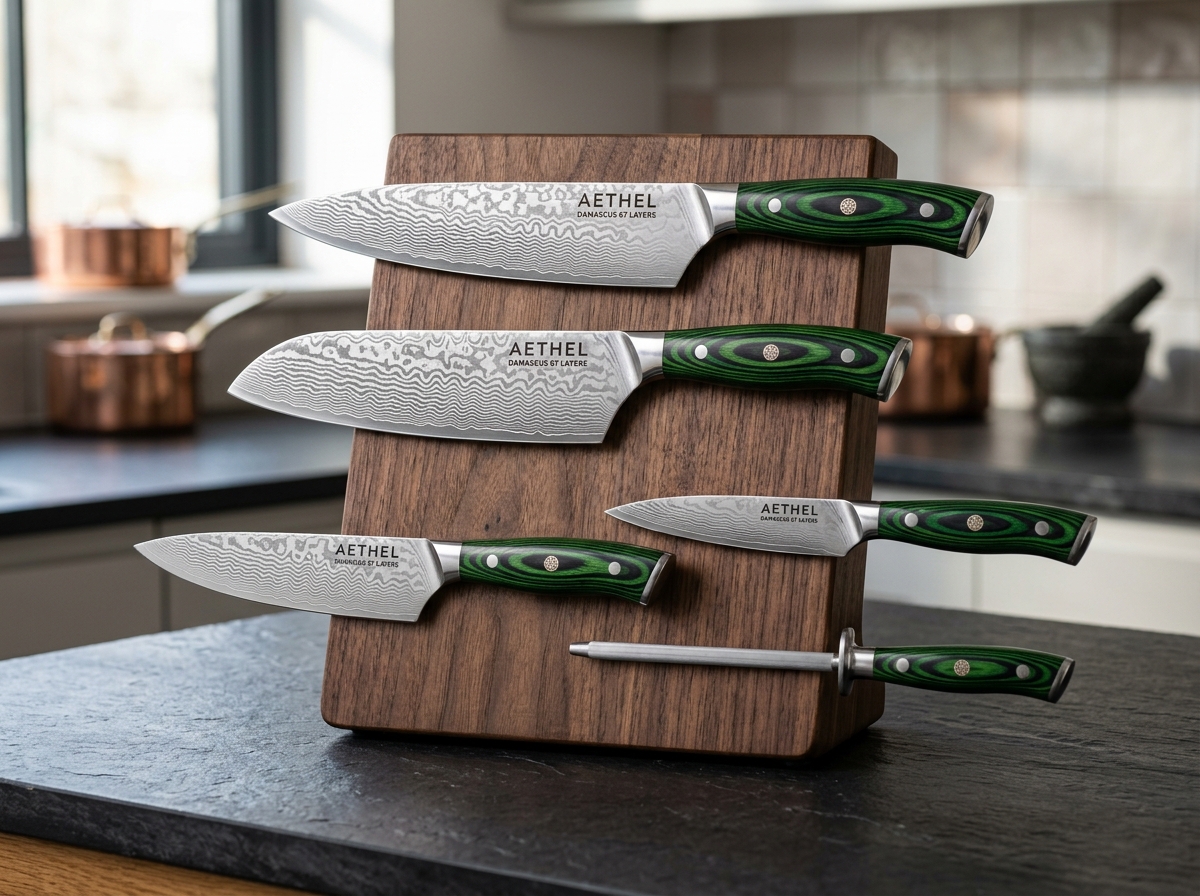
#1 HexClad Essential 6-Piece Japanese Damascus Steel Knife Set
The reigning benchmark for modern Damascus sets. Combining 67 layers of Japanese AUS-10V steel with an upright magnetic walnut display block that prevents blade micro-chipping.
- Stunning double-sided magnetic stand protects edges from dulling
- Vacuum heat-treated AUS-10V core delivers razor-sharp 12-degree bevel
- Premium investment cost
- Not dishwasher safe (hand wash and dry immediately)
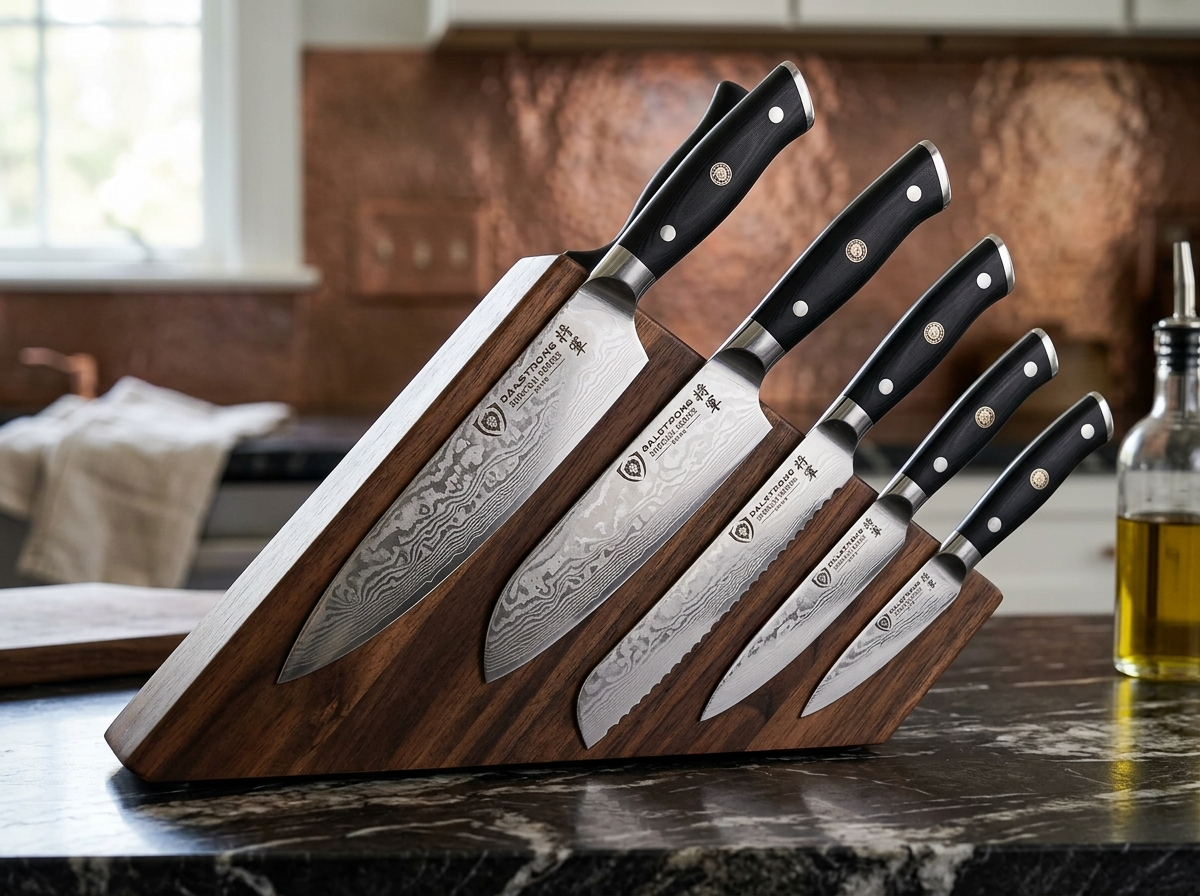
#2 Dalstrong Shogun Series ELITE 5-Piece Damascus Block Set
Built for chefs who demand eye-catching artistry with punishing performance. Features liquid nitrogen cryogenic tempering for unbeatable edge retention.
- Cryogenically treated for extreme 62+ Rockwell hardness and edge retention
- Impervious non-slip G10 military grade handle will never warp or crack
- Slightly heavier blade profile favored by Western grip cooks
- Extreme hardness requires gentle care to avoid micro-chipping on bone
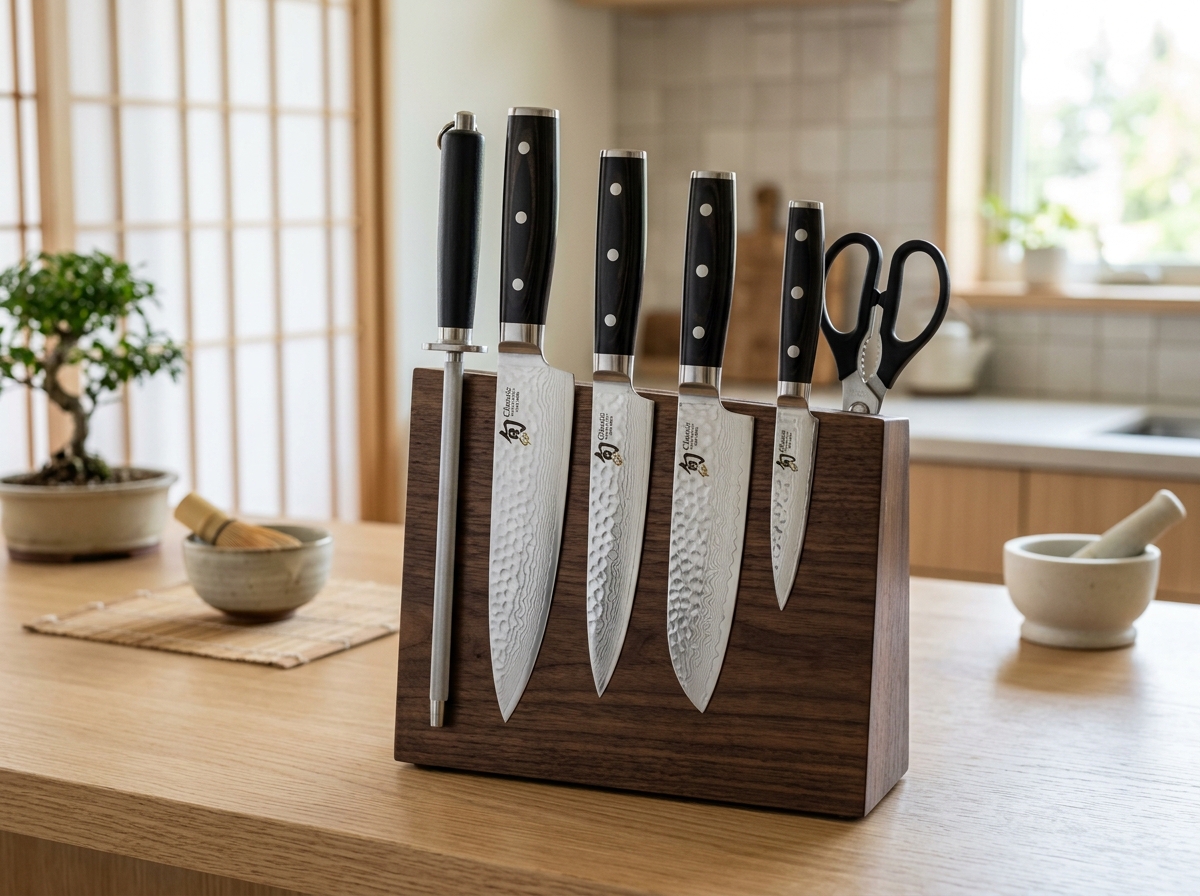
#3 Shun Classic 6-Piece Slimline Damascus Knife Block Set
Handcrafted in Seki City, Japan, the historic sword-making capital. Shun Classic offers whisper-quiet slicing and free lifetime factory re-sharpening.
- Handcrafted in Seki City, Japan through 100 individual artisan steps
- VG-MAX core contains extra tungsten and cobalt for unmatched edge life
- Highest price tier
- Very thin 16° Japanese edge requires wooden cutting boards only (no glass/marble)
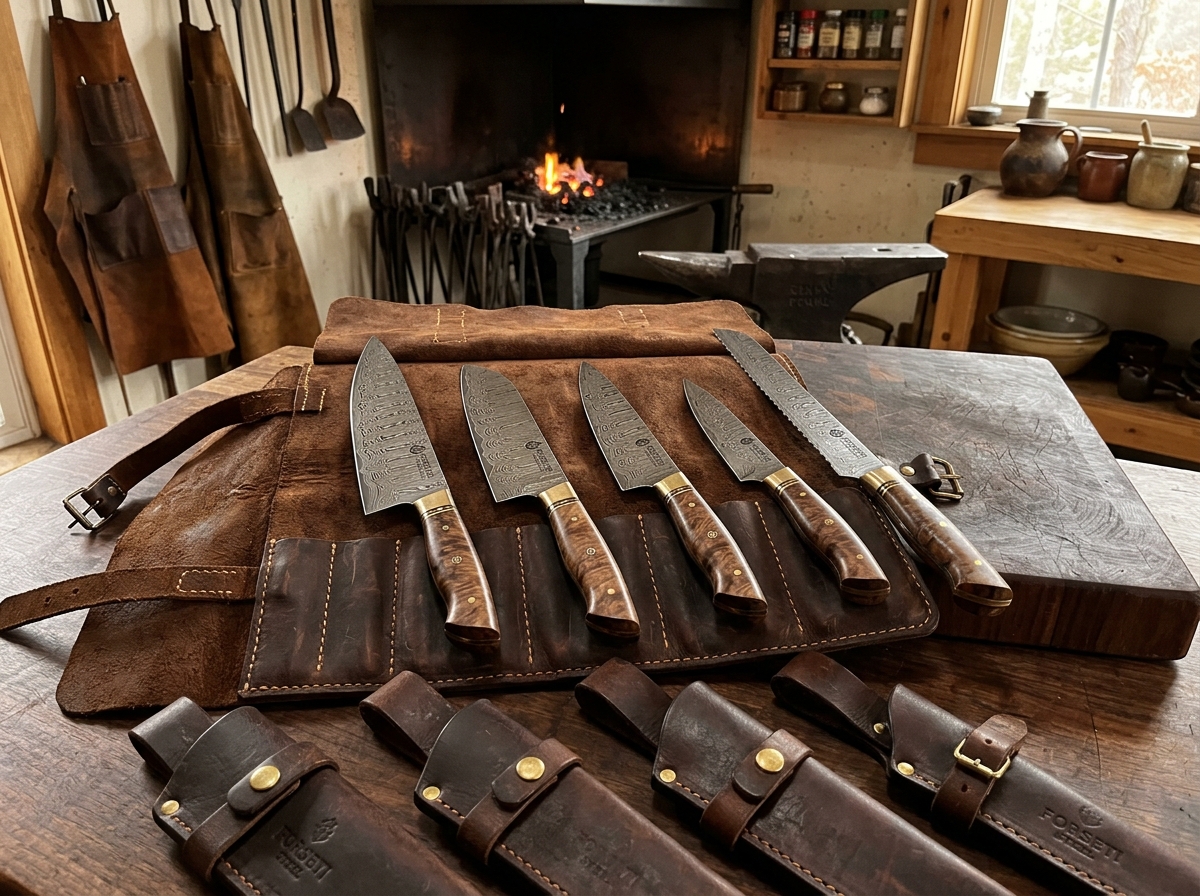
#4 Forseti Steel Valkyrie 5-Piece Hand-Forged Damascus Kitchen Set
For those who want authentic high-carbon blacksmith-forged Damascus with 256 real hammer-welded layers. Delivers unmatched soul and heirloom character.
- Authentic 256-layer folded pattern welding (not modern clad sheet)
- Rich organic feel ideal for pitmasters, BBQ cooks, and hunters
- Contains 1095 carbon steel: requires food-grade mineral oil after washing to prevent patina/rust
- Not a modern block set (uses leather roll/sheaths)
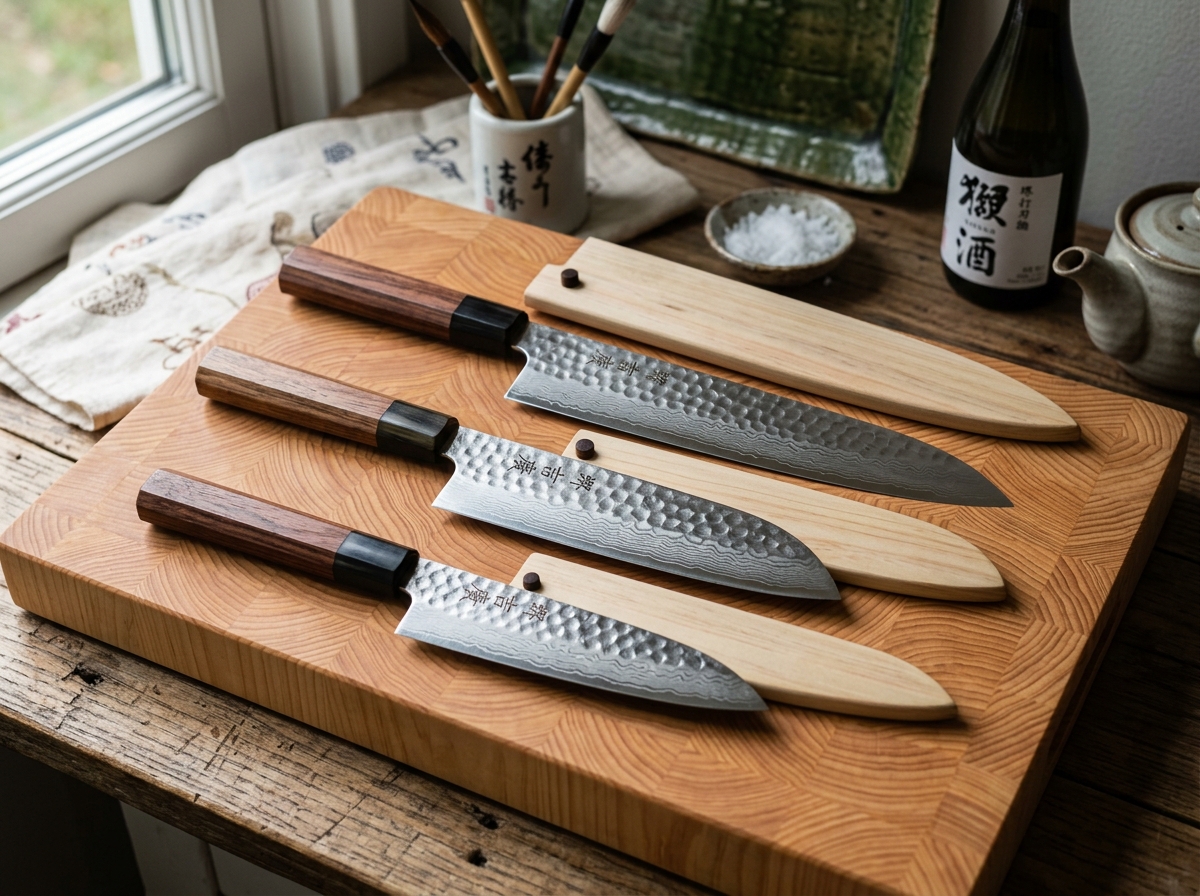
#5 Yoshihiro VG-10 46-Layer Hammered Damascus 3-Piece Executive Set
The culinary purist choice. 46 layers of Damascus capped with a hammered Tsuchime dimple finish that stops sliced potatoes and meats from sticking.
- Hammered "Tsuchime" textured finish releases food suction instantly
- Traditional Japanese octagonal Wa-handle provides featherweight precision
- Traditional Japanese Wa-handle may feel different to cooks accustomed to heavy Western bolsters
- Does not include a countertop block
Japanese Knife Anatomy & Metallurgy: Gyuto vs Santoku vs Nakiri
The Japanese equivalent of a Western chef’s knife. Features an 8 to 9.5-inch blade with a slight curve toward the tip. Ideal for slicing proteins, push-cutting, and long rocking motions with surgical precision.
Meaning "Three Virtues" (meat, fish, and vegetables). Features a flatter sheep’s foot profile (6.5 to 7 inches) designed for up-and-down vertical push chopping with maximum board contact.
A dedicated vegetable cleaver with a rectangular blade and straight cutting edge. Designed to chop completely through root vegetables and leafy greens without accordion-hinging.
San Mai Forging: Hard Core Clad in Shock-Absorbing Damascus
Traditional Japanese swordsmithing taught master cutlers that an ultra-hard blade will snap upon impact, while a soft blade will bend and lose its cutting edge immediately. Modern Japanese Damascus cutlery solves this paradox through San Mai (three-layer) lamination. A microscopic core of high-carbon Takefu VG-10 or R2/SG2 powdered metallurgy steel (hardened to 60–62 HRC) is forge-welded between 32 or 66 alternating layers of softer, ductile stainless steel (such as SUS410 and SUS430). The outer Damascus jacket absorbs mechanical shock and prevents edge chipping, while the ultra-hard exposed core holds a 15° apex through hundreds of prep sessions.
Traditional Japanese Wa-Handles vs Western Full-Tang
Authentic Japanese knives frequently utilize traditional wooden Wa-handles—typically octagonal, oval, or D-shaped grips crafted from ho wood (Japanese magnolia), chestnut, or resin-impregnated pakkawood fitted with a water buffalo horn ferrule. Unlike heavy Western full-tang handles with steel pommels, Wa-handles are remarkably lightweight. This shifts the blade’s center of balance forward toward the heel, allowing the weight of the knife itself to drive through delicate cuts with zero wrist fatigue.
Japanese Whetstone Grit Progression: 1,000 to 6,000 Grits
To maintain the razor-sharp scalpel edge of a genuine Takefu VG-10 core, Japanese master sharpeners never use motorized grinding wheels or pull-through sharpeners. Instead, follow a disciplined two-stone or three-stone Japanese waterstone sequence:
Establishes the primary 15-degree cutting bevel, raises a consistent micro-burr along the entire cutting edge, and corrects minor dull spots.
Refines the scratch pattern, deburrs the apex, and creates a silky slicing edge optimal for butchering raw fish and boneless poultry.
Mirror-polishes the bevel, producing an ultra-refined edge that cleanly slices ripe tomatoes, delicate herbs, and sashimi with zero cell damage.
Master the 15° Japanese Whetstone Angle
Calculate exact penny-stack heights and match your whetstone grits (1000/3000/6000) to preserve razor-sharp Japanese factory edges with our interactive calculator.
Frequently Asked Questions
Which core steel is best for authentic Japanese Damascus knives?
Takefu VG-10 and its enriched variant VG-MAX are the gold standards for edge retention and razor sharpness (60–62 HRC). Aichi AUS-10V offers slightly better impact resistance and ductility against accidental micro-chipping, while powdered SG2/R2 reaches an incredible 63+ HRC.
How should I sharpen a Japanese Damascus knife?
Always sharpen Japanese Damascus knives on Japanese waterstones (1000 grit for edge geometry, 6000 grit for mirror polishing) at a strict 15-degree angle. Never use pull-through carbide sharpeners or grooved steel honing rods.
Can Japanese Damascus knives cut through bones or frozen food?
No. Because Japanese VG-10 and SG2 cores are hardened to 60–62+ HRC, they lack the soft ductility of German steel. Striking dense bone or frozen ingredients will chip the microscopic cutting edge. Reserve a heavy Western cleaver for bone work.
What is the difference between Shun Classic and Yoshihiro Damascus?
Shun Classic features a modernized Western D-shaped Pakkawood handle with commercial mass-production consistency from KAI Corporation. Yoshihiro knives are hand-forged by artisan guilds in Sakai, featuring traditional octagonal Wa-handles and higher hand-finished craftsmanship.