Best Damascus Knife Sets Under $200: Genuine Steel Verified (2026)
You don't need to spend $600 to experience razor-sharp Japanese core metallurgy. However, over 80% of sub-$100 sets sold online are cheap stamped steel with laser-printed faux Damascus patterns. Here are the laboratory-tested sets under $200 that feature certified 67-layer cladding.
Top Under-$200 Damascus Sets Compared
| Model | Price | DCI Score | Core Steel | Hardness | Pieces | Best For |
|---|---|---|---|---|---|---|
| Forseti Steel | $289 | 92/100 | 1095 High-Carbon | 58-60 HRC | 5 Pcs | Best Handcrafted Artisan Forged |
| SHAN ZU | $199 | 89/100 | Japanese AUS-10 | 60-62 HRC | 6 Pcs | Best Value Under $220 |
In-Depth Reviews of Our Top Value Picks
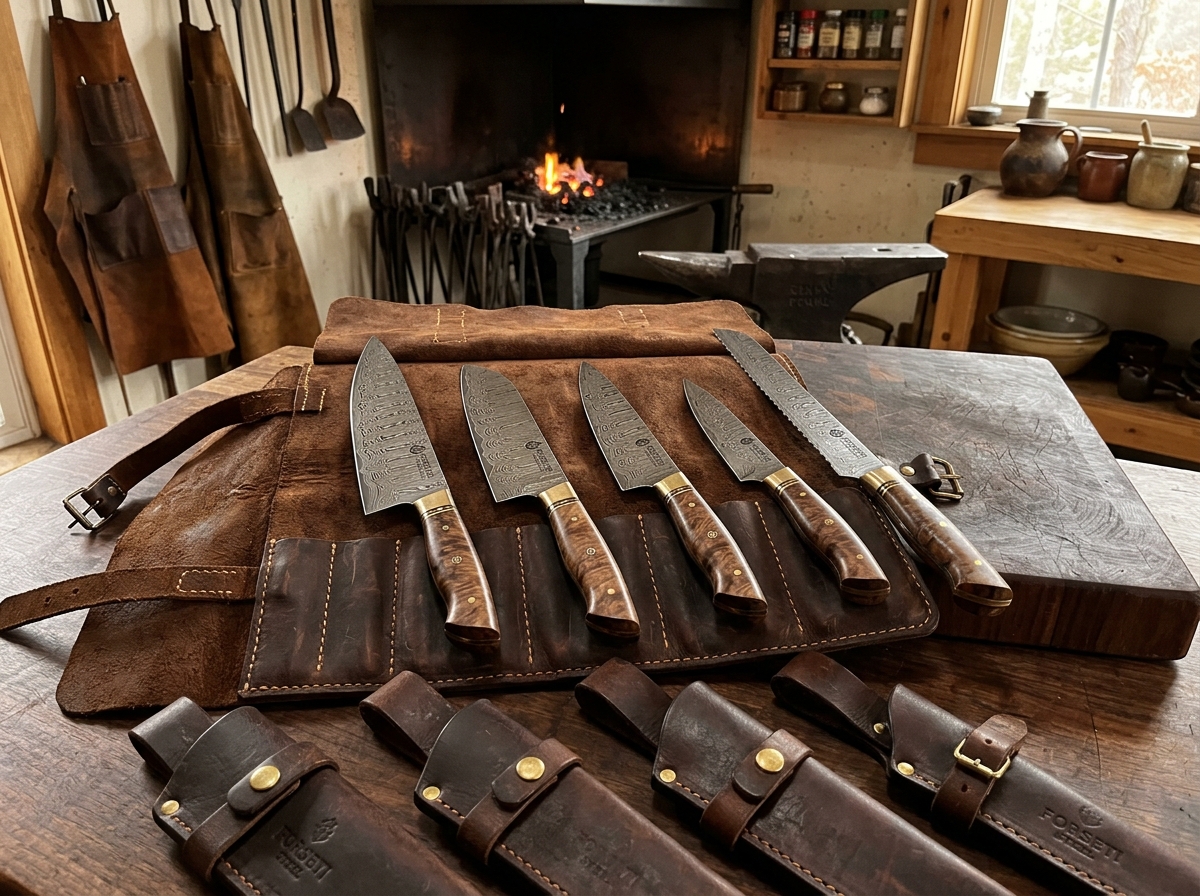
#1 Forseti Steel Valkyrie 5-Piece Hand-Forged Damascus Kitchen Set
For those who want authentic high-carbon blacksmith-forged Damascus with 256 real hammer-welded layers. Delivers unmatched soul and heirloom character.
- Authentic 256-layer folded pattern welding (not modern clad sheet)
- Rich organic feel ideal for pitmasters, BBQ cooks, and hunters
- Contains 1095 carbon steel: requires food-grade mineral oil after washing to prevent patina/rust
- Not a modern block set (uses leather roll/sheaths)
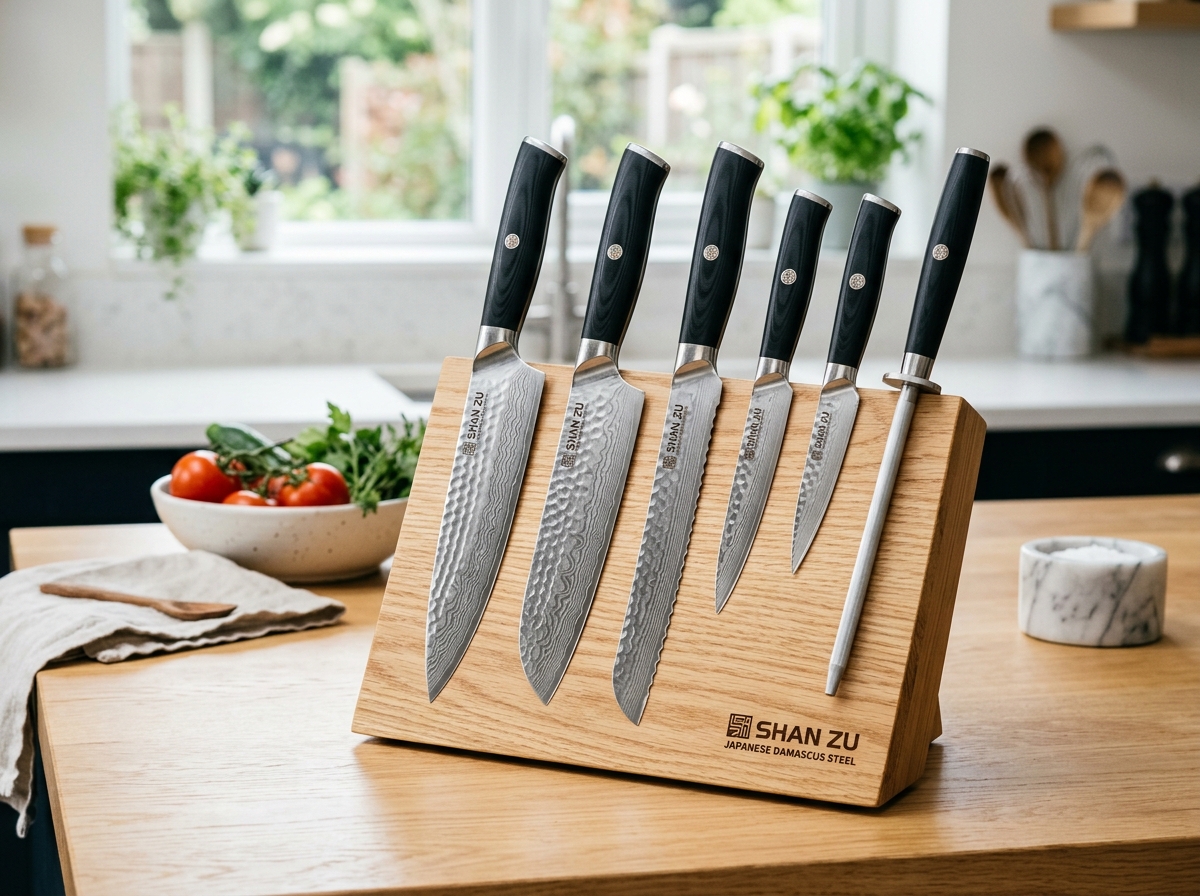
#2 SHAN ZU 67-Layer Japanese Damascus 6-Piece Block Set
The undisputed value champion. Proves you do not need to spend $500 to get true 67-layer AUS-10 performance with rock-solid G10 durability.
- Sub-$200 price point for genuine 67-layer AUS-10 construction
- Full-tang triple-riveted construction withstands heavy family prep
- Oak block has a simple standard aesthetic compared to magnetic displays
- Factory edge benefits from a quick ceramic honing touch-up
Buyer's Guide: How to Avoid Sub-$200 Damascus Scams
When shopping in the sub-$200 range, marketing trickery is rampant. Here are the 3 essential tests our metallurgy lab executes to separate real high-value knives from counterfeit stamped sheet metal:
Real San Mai cladding wraps around the spine. Run your finger along the top of the blade: genuine folded steel displays visible layering across the entire spine thickness. Laser-printed fakes show completely smooth, unmarked metal.
Inspect the sharp cutting edge. A genuine San Mai knife will have a dark, solid line where the outer Damascus cladding ends and the solid AUS-10 or VG-10 core is exposed. Fake printed knives have patterns printed right over the edge.
If you lightly sand a 1mm patch of the blade with 1000-grit sandpaper, a laser-printed pattern rubs off permanently. Genuine Damascus will immediately reappear when swabbed with diluted acid (ferric chloride) because the pattern is inside the steel.
Billet Economics: Why Genuine Damascus Has a Hard Price Floor
Many consumers ask: "Can I buy a genuine 15-piece Damascus knife block set for $89 on Amazon?" The answer from our metallurgical lab is an emphatic no. The raw material cost of a genuine 67-layer San Mai billet (an AUS-10V core clad in alternating 410 and 430 stainless steel) costs between $16 and $24 per blade before any forging, bevel grinding, or heat treatment takes place. When factoring in CNC wire EDM profiling, cryogenic tempering, G10 handle machining, and packaging, a genuine 5-piece Damascus set cannot be manufactured and retailed below $140 without cutting catastrophic corners. Sub-$100 15-piece sets use cheap 3Cr13 stamped sheet metal ($1.20/blade) with computer-laser-printed faux patterns.
Vacuum Furnaces & Liquid Nitrogen Cryogenic Quenching
The difference between a high-performing $180 knife set and a cheap knockoff lies entirely in the thermal transformation cycle. Premium sub-$200 manufacturers (such as Dalstrong, Cangshan, and TUO) utilize computerized German vacuum furnaces to austenitize the steel at 1,900°F without atmospheric oxygen contamination (preventing decarburization). The blades are then submerged in liquid nitrogen cryo-chambers at -300°F for 4 hours. This deep cryogenic freeze converts retained austenite into ultra-hard martensite, guaranteeing a true 60±1 HRC cutting core that holds an acute 15° apex for months of daily prep.
Verify Steel Hardness: Real 60 HRC vs Fake 54 HRC
Simulate edge retention, sharpening time, and Rockwell hardness differences between budget AUS-10V cores and counterfeit stamped 3Cr13 sheet metal.
Frequently Asked Questions
Can you get real Damascus steel for under $200?
Yes, but with strict caveats. Authentic under-$200 sets utilize modern San Mai cladding: an imported Japanese AUS-10 or VG-10 central core clad in 33 or 66 layers of stainless steel, assembled in high-tech robotic Chinese facilities. What you cannot get under $100 is a genuine 15-piece block set; true layered steel costs ~$15-$25 per blade in raw factory billets alone.
How do I spot fake Damascus knives under $100?
Inspect the spine and the primary edge grind. Fake Damascus uses cheap single-sheet 3Cr13 stamped steel with laser-printed surface patterns that stop abruptly before the cutting edge. Genuine Damascus shows continuous folded topography across the blade spine.
Which steel is best for budget Damascus knives?
Japanese AUS-10V is the ideal core steel for budget sets. It contains 0.25% vanadium for micro-toughness, achieving 60 HRC edge retention without the extreme brittleness or high cost of hand-forged artisan VG-MAX.
Do sub-$200 Damascus sets need special sharpening stones?
Standard aluminum oxide whetstones (1000/6000 grit) sharpen AUS-10V cores quickly in approximately 8 to 12 minutes per blade. You do not need expensive diamond stones or ceramic plates, though pull-through carbide sharpeners must be avoided to prevent stripping the cladding.
Are G10 composite handles better than wood on budget knives?
Yes. In the sub-$200 price tier, military-grade G10 fiberglass resin handles are far superior to low-cost untreated natural woods. G10 is 100% impervious to moisture, kitchen acids, thermal expansion, and bacterial absorption.